
Introduction
How climate change is affecting wildlife and natural habitats: One of the most significant environmental problems facing our planet today is the issue of climate change. Changes in the Earth’s temperature, unpredictable weather, melting ice caps, and rising sea levels are just some of the many indications that the Earth’s climate is changing at a rapid rate. Although the changing climate has many implications for human lives, the impact on wildlife and natural habitats has been the greatest.
Animals need a stable environment to survive, and their food, breeding, and migration patterns are all linked to the environment and the climate. When the environment changes, the balance changes, and many animals face many problems. Around the globe, many researchers and environmental activists are observing many changes in the lives of animals.
This article will discuss the impact of climate change on wildlife and natural habitats, and the need to save the environment will be highlighted.
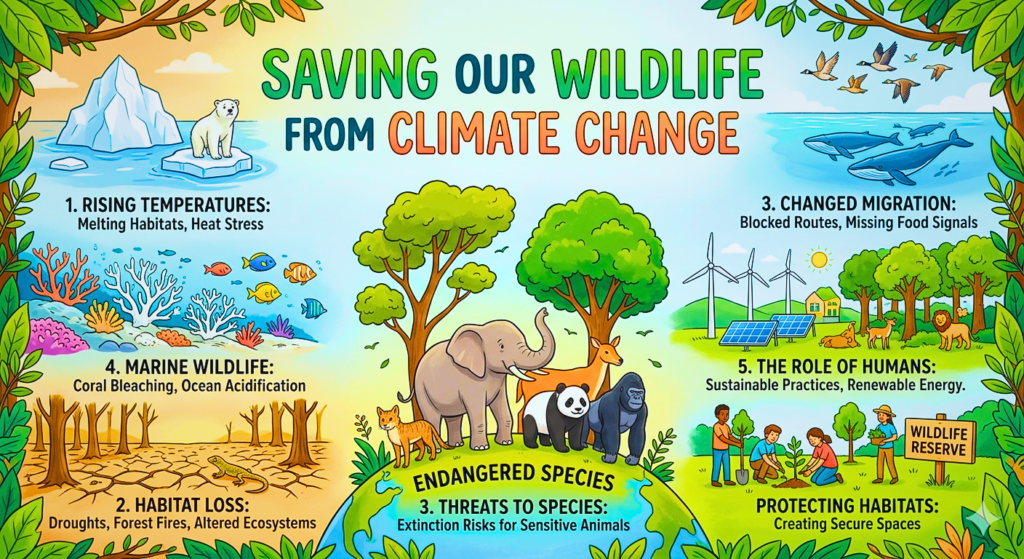
Rising Temperatures and Wildlife Survival
One of the most dramatic results of climate change is an increase in temperature. Even a slight increase in temperature has a great impact on wildlife survival.
Most animals and plants thrive at very specific temperatures. If temperatures increase beyond what an animal or plant can withstand, survival becomes challenging. For example, animals that live in cold climates, such as polar regions or mountainous regions, face the biggest challenge because their natural environment is vanishing.
Temperature increases may also impact wildlife health. For example, an increase in temperature may lead to a decrease in reproduction rates and an increase in diseases. Animals must move to cooler climates or face extinction.
Habitat Loss and Ecosystem Disruption
Climate change is causing dramatic alterations to natural habitats all over the world. Natural habitats such as forests, wetlands, coral reefs, and polar ice regions are all being affected.
For example, polar ice loss is reducing natural habitats for polar animals. Sea level rises also threaten coastal ecosystems and wetlands. Wetlands provide a natural environment for many species of birds, fish, and mammals.
In forests, increased temperatures and altered rainfall patterns may lead to droughts and fires. Such occurrences lead to a loss of habitat and force animals to migrate or struggle to survive in a changing environment.
When a habitat is altered or destroyed, it upsets the ecosystem. Such occurrences may affect the ecosystem as a whole, leading to environmental damage.
Changes in Animal Migration and Behavior
Animals migrate to a new environment in search of food, to reproduce, or to escape harsh environmental conditions. Animals migrate due to various reasons, and climate change is interfering with their migratory patterns.
Birds, whales, and other migratory animals migrate according to environmental signals, such as increased temperatures and seasonal changes. Animals migrating to a new environment are affected when there is a change in environmental patterns.
For instance, birds may arrive in their breeding grounds too early or too late in the season, leading to a lack of food. Marine animals may also migrate to a new environment in search of cool water.
How climate change is affecting wildlife and natural habitats:Threats to Endangered Species
Climate change is an even bigger threat to species that are already endangered. This is because some of these species have small populations and live in limited habitats. When their habitats disappear or change in a way that does not favor them, they may not know where to go. Some of these species are unable to adapt to changing environmental conditions.
For instance, there are some amphibians, reptiles, and insects that are highly sensitive to temperature change. Similarly, coral reefs are home to thousands of marine species, which are highly susceptible to temperature change in the ocean.
If effective measures are not taken to protect these species, they are likely to face extinction in the near future.
How climate change is affecting wildlife and natural habitats:Impact on Marine Wildlife
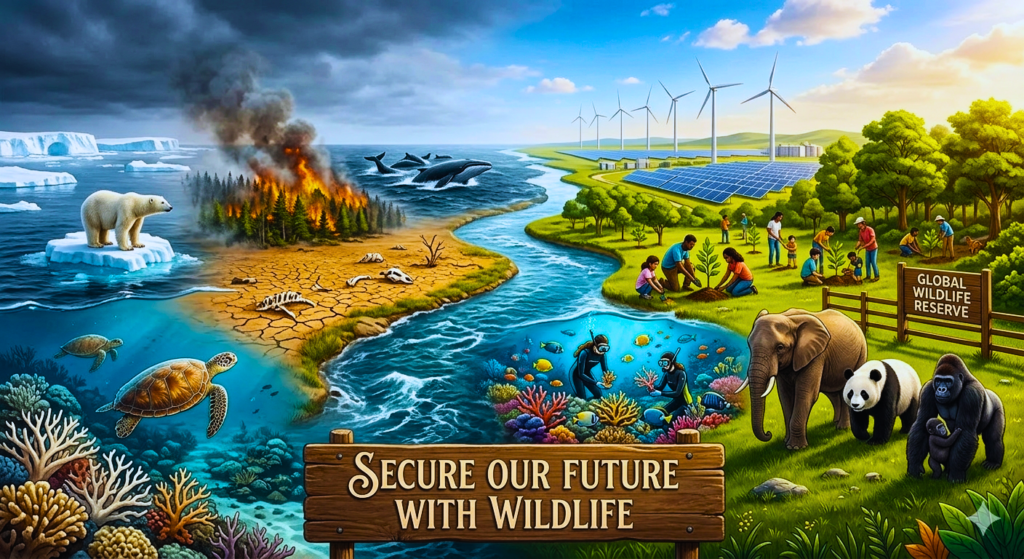
The oceans are very crucial in maintaining a stable Earth climate. However, they are also greatly affected by climate change. When the temperature of the oceans increases, it leads to coral bleaching. This is a condition that harms coral reefs, which are home to thousands of marine species. Coral reefs are therefore destroyed by high temperatures in the oceans. This has a great impact on all the fish and other marine animals that live in the reefs. Ocean acidification is another problem that is affecting marine life in the oceans. This is a condition that occurs in the oceans due to increased levels of carbon dioxide in the atmosphere. The condition makes it hard for shellfish and corals to build their shells. As a result of this condition, stability is being lost in the oceans, and all marine species are at a great risk of extinction.
The Role of Humans in Protecting Wildlife
While facing various challenges due to climate change, it is also within our capacity to minimize its impact.
Protecting forests, reducing carbon emissions, and supporting wildlife protection schemes are all crucial steps in protecting our planet. Everyone, whether it is the government, organizations, or individuals, plays a role in protecting our planet.
Establishing protected areas like national parks and wildlife reserves can help animals live in a secure habitat. Sustainable practices like using renewable energy sources, recycling, and reducing pollution can help slow down global warming and its impact.
Public awareness and educating people are also crucial steps in protecting wildlife. Once people understand the importance of wildlife protection, they will definitely contribute to it.
How climate change is affecting wildlife and natural habitats:Conclusion
Climate change is altering our planet in ways that were unimaginable in the past. From rising temperatures and habitat destruction to animal migration and endangered species, wildlife around the world is facing various challenges and difficulties.
Wildlife and habitat protection is not only crucial for animals but for the entire planet. These ecosystems offer us essential services like clean air and water and food supplies.
We can definitely protect biodiversity and preserve the natural balance of our planet if we take responsible actions today. Our future with wildlife is in our hands.