
Future Technology Innovations is no longer just a helpful tool in our daily lives—it has become a core part of how we live, work, connect, and develop. From the smartphones in our hands to the powerful computers that support global businesses, technological progress is happening at an unbelievable pace. The digital changes we are seeing today are not just passing trends; they are shaping the direction of human development.
In this article, we will look at how modern technology has progress, and how areas like artificial intelligence, automation, cybersecurity, cloud computing, and more are shifting industries and everyday activities.
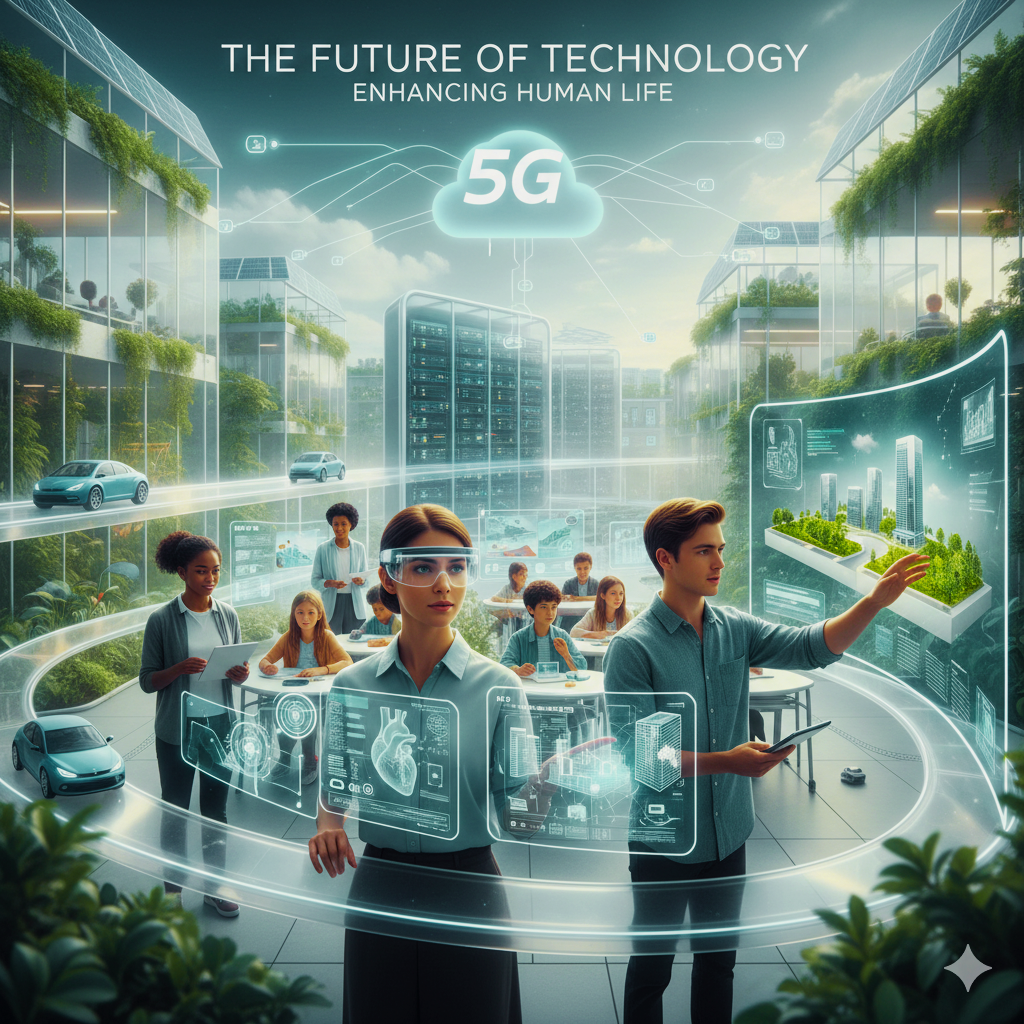
Future Technology Innovations:The Rise of Artificial Intelligence (AI)
Artificial Intelligence (AI) is one of the most transformative technologies of our time. Unlike traditional software that follows strict commands, AI is designed to learn from data, recognize patterns, and improve its performance over time.
AI is already a part of our daily experiences:
1.Streaming services suggest content based on what we have watched before.
2.Online stores recommend products that match our interests.
3.Virtual assistants help with tasks and answer questions.
4.Banks use AI to spot fraudulent activity and stop suspicious transactions.
In healthcare, AI helps doctors find diseases earlier by reviewing medical scans and patient records. In education, AI tools assist in tailoring learning to students’ needs.
Looking ahead, with advances in machine learning and deep learning, AI will become more intelligent, efficient, and deeply integrated into our lives. However, it is also important to address ethical issues such as protecting personal data, avoiding biased algorithms, and dealing with the effect of AI on employment.
Future Technology Innovations:Automation and the Changing Workforce
Automation is changing the way industries operate by reducing the need for manual labor and increasing efficiency. Factories now use robots to assemble products with high precision. Warehouses use automated systems to manage inventory. Even customer service is increasingly handled by chatbots.
While automation boosts productivity and cuts costs, it is also changing the job market. Some jobs that involve repetitive tasks are becoming obsolete, but new opportunities are emerging in fields such as robotics, AI development, cybersecurity, and data science.
To remain competitive, individuals must keep updating their skills. Digital knowledge, problem-solving abilities, creativity, and adaptability are becoming more important than ever. The workforce of the future will not just compete with machines; it will work alongside them.
Cloud Computing: The Foundation of Digital Transformation
Cloud computing lets businesses and individuals store information and run applications over the internet instead of using physical equipment. This change has made technology more available and easier to scale.
Companies no longer need expensive on-site servers. Instead, they can use cloud services to adjust their resources based on need. This flexibility has helped startups, small businesses, and large corporations.
Cloud technology also supports remote work. Teams can work from anywhere using shared platforms and real-time communication tools. The rise of remote and hybrid work models would not have been possible without cloud infrastructure.
However, as more data is stored online, security becomes more critical. Protecting sensitive information in the cloud requires strong encryption, secure authentication, and continuous monitoring.
Cybersecurity in a Connected World
As technology becomes more widespread, so do the risks of cyber threats. Cybersecurity is no longer optional—it is a necessity. Businesses, governments, and individuals are constantly targeted by hackers trying to steal data or harm systems.
Common threats include:
1. Phishing attacks
2. Ransomware
3. Data breaches
4. Identity theft
Using strong passwords, two-factor authentication, updating software regularly, and educating users can greatly reduce these risks. Organizations are spending a lot on hiring cybersecurity experts and setting up advanced security measures to protect their digital assets.
In the future, cybersecurity will rely more on AI to detect unusual activity and stop threats before they cause damage. As our world becomes more connected, digital security will become as vital as physical security.
The Internet of Things (IoT): A Connected System
The Internet of Things (IoT) refers to a network of devices connected to the internet that can gather and share data. Examples include smart homes, wearable fitness trackers, self-driving cars, and industrial sensors.
Smart homes let users control lighting, temperature, and security from a distance. In farming, IoT sensors monitor soil conditions to improve food production. In cities, smart traffic systems help reduce traffic jams and pollution.
While IoT improves efficiency and convenience, it also adds more connected devices that could be targets for cyberattacks. Therefore, secure design and data protection are crucial parts of IoT development.
The Role of 5G and Faster Internet
Faster internet speeds are unlocking new possibilities. 5G networks offer much lower latency and higher data speeds than earlier versions. This allows for smoother video streaming, quicker downloads, and better performance in online gaming and remote collaboration.
More importantly, 5G supports emerging technologies like driverless cars, remote surgery, and smart cities. With faster connectivity, devices can communicate instantly, making real-time applications more reliable.
As internet access improves globally, more people in rural and underserved areas can benefit from online education, telemedicine, and digital financial services than ever before.
Future Technology Innovations in Education and Online Learning
Technology has changed education by making learning more flexible and accessible. Online courses, digital classrooms, and interactive platforms let students learn from anywhere in the world.
Educational technology tools provide personalized feedback, track progress, and adjust content to match individual learning speeds. This helps create a more inclusive and effective learning environment.
However, digital education relies on reliable internet access and digital skills. Governments and educational institutions must work to reduce the digital divide and ensure that all students have equal opportunities to learn.
Ethical Challenges and Responsible Innovation
While technology brings many benefits, it also raises important ethical concerns. Issues such as data privacy, algorithmic bias, misinformation, and environmental impact are serious.
Developers should create systems that are fair and accountable. Governments need to set rules that support innovation while protecting people.
Responsible innovation means building technology that benefits everyone and avoids harm or unfairness.
The Future: Technology That Enhances Human Life
The future of technology is not just about faster devices or smarter machines—it is about improving people’s lives. Sustainable technology, green energy solutions, and digital healthcare will play a key role in shaping a better world.