
Introduction
Impact of technology on sports One of the most important elements affecting modern sport is technology. From professional stadiums to local training grounds, digital innovation is changing how athletes train, how matches are played, and how fans experience the action. The integration of smart devices, artificial intelligence, data analytics, and advanced broadcasting systems has created a new era where performance and entertainment meet precision and speed.
In this article, we will explore how technology is transforming the world of sports, improving fairness, enhancing performance, and redefining the fan experience in the digital age.
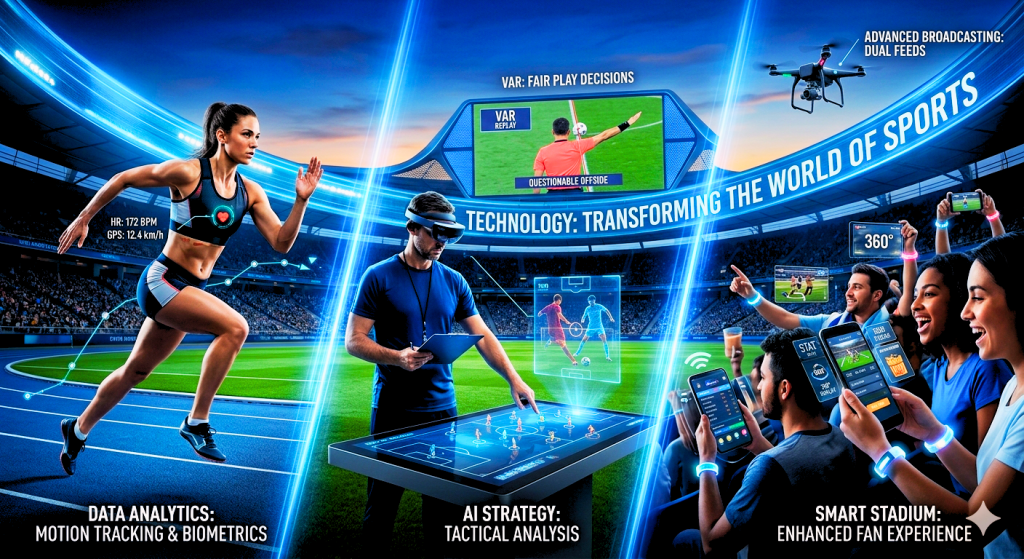
The Rise of Data Analytics in Modern Sports
Data analytics has become the backbone of professional sports strategy. Teams now rely on detailed performance statistics rather than only instinct and experience.
For example, clubs in leagues like the English Premier League use advanced tracking systems to monitor players’ movements, passing accuracy, sprint speed, and even heart rate during matches. Coaches analyze this information to adjust tactics, identify weaknesses, and reduce injury risks.
wearable devices such as GPS trackers and smart vests collect real-time data during training sessions. This allows trainers to:
1.Measure physical workload
2.Prevent overtraining
3.Customize fitness programs
4.Improve recovery strategies
As a result, athletes can perform at their peak while minimizing injuries.
Artificial Intelligence and Performance Enhancement
Artificial Intelligence (AI) is playing a major role in sports transformation. AI-powered software can analyze thousands of game situations within seconds. This helps coaches make smarter decisions and predict opponent strategies.
In global tournaments like the FIFA World Cup, AI systems analyze player positioning and team formations to provide deep tactical insights. AI also supports scouting by identifying talented players based on performance metrics rather than reputation alone.
Benefits of AI in sports include:
1.Improved match predictions
2.Personalized training programs
3.Injury risk detection
4.Tactical performance analysis
AI does not replace human talent-it enhances it.
Impact of technology on sports : Video Assistant Referee (VAR) and Fair Play
One of the most discussed technological advancements in football is the Video Assistant Referee (VAR) system. VAR was introduced to reduce human error and ensure fair decisions during crucial moments.
In major competitions like the UEFA Champions League, VAR helps referees review goals, penalties, red cards, and offside decisions using video replays.
While debates about its impact continue, VAR has significantly reduced controversial decisions and increased transparency in the game. Technology is now helping protect the integrity of sports.
Wearable Technology and Smart Equipment
Wearable technology has changed how athletes train and recover. Smartwatches, fitness bands, and biometric sensors track:
1.Heart rate
2.Oxygen levels
3.Muscle stress
4.Sleep quality
In sports like basketball and athletics, performance monitoring systems help players improve speed, endurance, and strength scientifically.
Tennis has also adopted smart racket sensors to analyze swing speed and accuracy. In cricket, smart ball-tracking systems like Hawk-Eye assist umpires in making LBW decisions.
These innovations show how sports equipment is becoming smarter and more intelligent.
How AR and VR Are Revolutionizing Sports Training
Virtual Reality (VR) is no longer limited to gaming. Athletes now use VR simulations to practice real-game situations without physical risk.
For example:
1.Quarterbacks in American football use VR to practice reading defenses.
2.Football players simulate penalty scenarios.
3.Racing drivers train using virtual simulators.
Augmented Reality (AR) enhances fan engagement by providing live match statistics and interactive viewing experiences.
Training environments are becoming safer and more intelligent through technology.
Impact of technology on sports:Smart Stadiums and Fan Experience
Modern stadiums are becoming technologically advanced entertainment hubs. High-speed Wi-Fi, digital ticketing, facial recognition systems, and mobile apps have improved fan convenience.
During major events like the Olympic Games, organizers use advanced broadcasting technologies such as 4K cameras, drone coverage, and real-time analytics to deliver immersive experiences worldwide.
Fans can now:
1.Watch live replays instantly
2.Access player statistics in real time
3.Order food via mobile apps
4.Engage with interactive screens
Technology is bridging the gap between stadium and home viewing experiences.
Social Media and Global Sports Marketing
Social media platforms have completely transformed sports marketing. Athletes can now connect directly with millions of fans worldwide.
Clubs from leagues like the NBA use digital campaigns, live streaming, and short-form videos to increase engagement. Players build personal brands, secure sponsorships, and grow their influence beyond the field.
Benefits of digital marketing in sports:
1.Global fan reach
2.Real-time updates
3.Direct athlete-fan interaction
4.Increased sponsorship opportunities
Technology has turned sports into a global entertainment industry.
Injury Prevention and Sports Medicine Innovation
Medical technology has significantly improved athlete safety. Advanced scanning systems detect muscle imbalances before they become serious injuries.
Cryotherapy chambers, robotic rehabilitation equipment, and AI-driven health monitoring tools speed up recovery. Clubs now invest heavily in sports science departments to protect players’ long-term careers.
With predictive injury analysis, teams can manage player workload more effectively, reducing career-ending risks.
The Role of Blockchain and Digital Security in Sports
Blockchain technology is emerging in sports for secure ticketing and digital collectibles. NFTs (Non-Fungible Tokens) allow fans to own digital sports moments securely.
Secure payment systems protect financial transactions, while anti-doping technologies ensure fair competition.
Digital security has become essential as sports increasingly rely on online systems.
Challenges of Technology in Sports
Impact of technology on sports Despite its advantages, technology also brings challenges:
1.High implementation costs
2.Reduced human spontaneity
3.Over-reliance on data
4.Privacy concerns
Some fans argue that too much technology removes emotional intensity from the game. Therefore, maintaining balance is crucial.
The Future of Sports Technology
The future promises even more innovation. We may soon see:
1.AI-powered referees
2.Fully immersive VR viewing experiences
3.Biomechanical performance suits
4.Advanced genetic-based training
As technology continues to evolve, sports will become faster, fairer, and more connected globally.
Conclusion
Technology is transforming the world of sports in ways that were unimaginable just a decade ago. From AI-driven analysis and wearable devices to smart stadiums and global digital marketing, innovation is redefining performance, fairness, and fan engagement.
While challenges remain, the benefits clearly outweigh the drawbacks. Technology is not replacing human talent—it is empowering athletes, supporting referees, and enhancing the experience for millions of fans worldwide.
The world of sports is entering a smarter, more data-driven era, and this transformation is only just beginning.